
Written by the Inclusive Roofing team · C-39 CSLB #1145966. General information, not a substitute for an on-site inspection or project-specific code guidance.
A silicone coating may be an option for a suitable existing flat or low-slope roof, while a failing roof may need more extensive repairs or replacement. The decision depends on the existing system, moisture, adhesion, drainage and the selected product's requirements—not a fixed roof age.
What silicone re-coat does
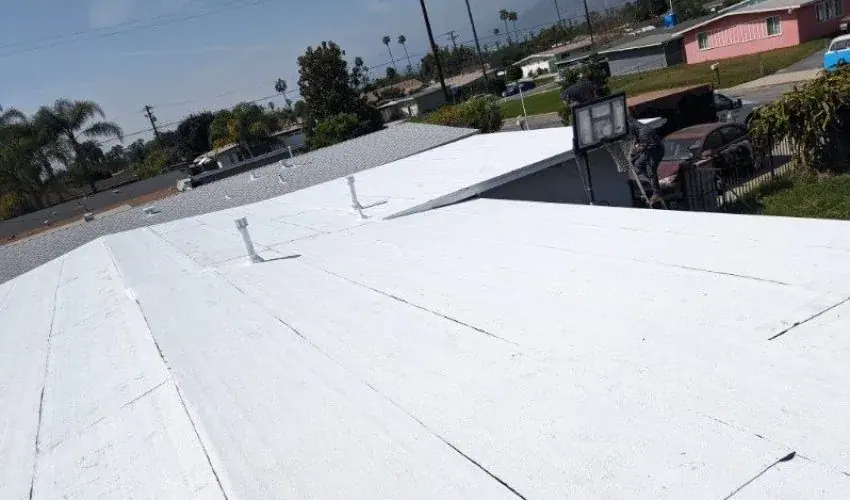
Silicone coating is a fluid-applied roof treatment used on compatible, prepared substrates. Repairs, reinforcement, primers and coating thickness must follow the chosen manufacturer's requirements; coating over a visible defect is not automatically an adequate repair.
A suitable silicone system may extend the service life of an existing roof, but performance and warranty eligibility depend on the product, substrate condition, preparation, coating thickness and installation requirements. Confirm the specific product's current reflectance rating, applicable energy-code requirements and written manufacturer warranty; do not assume all coatings qualify.
When silicone is the right answer
Silicone re-coat is the right call when:
- The existing membrane is sound — no major delamination, no large blisters, no widespread tearing
- Drainage issues have been assessed and the proposed assembly meets the manufacturer's requirements
- The underlying insulation is dry and intact
- The existing system has wear that can be addressed within a suitable coating scope
- You want to avoid the cost and disruption of a tear-off
When full replacement is the right answer
Full replacement is the right call when:
- The existing membrane is failed — large open seams, widespread tearing, multiple active leaks
- The insulation underneath is wet (silicone over wet insulation traps the moisture and accelerates deck rot)
- The deck itself has rotted or structural issues
- The roof has had multiple coats already and the existing surface won't accept another
- You're changing the roof system entirely (e.g., adding tapered insulation for drainage)
The honest cost comparison
Compare the complete scopes rather than a generic per-square-foot price:
- Coating: surface assessment, cleaning, preparation, specified repairs, compatible materials and application requirements.
- Replacement: tear-off or another permitted approach, removal of unsuitable materials, deck work and a complete new assembly.
- Both: access, drainage, penetrations, disposal where applicable, documentation, exclusions and warranty terms.
A coating proposal can have a lower initial total because it retains suitable existing components. That is not a saving if it leaves underlying failure unresolved. Our roofing estimate guide helps compare what is actually included.
How we inspect to make the call
An assessment of flat roof options should consider:
- Membrane condition (delamination, blisters, tearing, seam integrity)
- Signs of moisture in underlying materials and whether specialist testing is needed
- Accessible deck condition and any limitations on what can be inspected
- Drainage (ponding patterns, drain function, scupper integrity)
- Penetration flashings (most common failure point)
Sound, dry components are necessary considerations but do not by themselves approve every coating. Compatibility, attachment, drainage and product requirements must also be checked. Wet or deteriorated components need an appropriate repair or replacement scope.
The Title 24 angle
The applicable California energy requirements depend on the building, climate zone, roof slope and work proposed. Verify the exact product in the Cool Roof Rating Council directory and confirm compliance with the permitting authority. Not every silicone product or white roof automatically qualifies.
The bottom line
Ask which inspection findings support a coating, repair or flat roof replacement. Request photos, limitations and a written scope. Both approaches should be discussed when both are suitable; neither should be offered as a universal fix.
Frequently asked questions
Can silicone coating be applied over a leaking flat roof?
A leak needs diagnosis first. Some localized defects can be repaired before coating a suitable roof, but coating is not a substitute for addressing wet insulation, failed decking or inadequate drainage. Compatibility and preparation must meet the selected product's requirements.
Does every white silicone coating meet California cool-roof requirements?
No. Check the exact product's rated performance and the requirements that apply to the project. A white appearance or a general coating category does not establish code compliance or warranty eligibility.
How should I compare coating and replacement quotes?
Compare preparation, repairs, removal of wet materials, drainage work, installation requirements, exclusions and written warranty terms. A lower surface-treatment price is not comparable to a replacement scope that addresses underlying failure.
Official guidance and references
Consult these resources for the relevant public guidance. Product suitability, permit requirements and inspection findings must be confirmed for your property.
Keep reading
- Guide: Repair vs. replacement
- Guide: Estimate cost factors
- Guide: Materials comparison
- Tile vs. Shingle in Pasadena: Which Roof Is Right for Your Home?
- When to Repair vs. Replace Your Roof: An Honest Decision Framework
- Tile Reset vs. Full Tile Replacement: How to Decide
Related: roofing services, cities we serve, FAQ.