
Why you will not find a price list here
Any single number for 'a roof' ignores the things that actually set the price: pitch, layers, penetrations, drainage, the condition of the deck, and the material you choose. Instead of guessing, we would rather explain the factors and then look at your roof in person.
1. Size, pitch and complexity
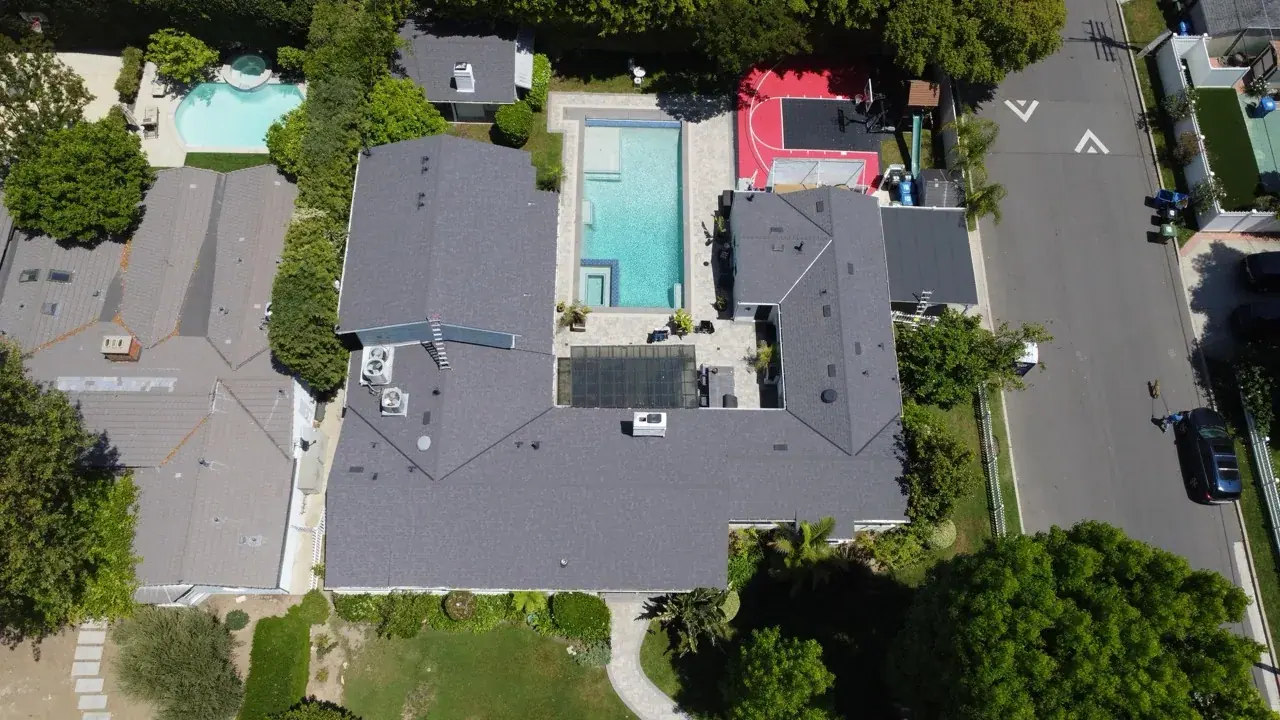
More area means more material and more labor, but shape matters as much as square footage.
- Steep pitch slows work and needs additional safety setup
- Many valleys, hips, dormers and changes of plane add cutting and flashing
- Skylights, chimneys, solar mounts and vents each need their own detail work
2. Material and system choice
Asphalt shingles, concrete or clay tile, and flat-roof membranes are different products with different installation methods, weights and expected service lives. Within each there are tiers: standard and heavyweight shingles, different tile profiles, single-ply, modified bitumen or silicone systems.
Heavier materials such as tile can also raise the question of structural capacity, particularly when switching from a lighter roof.
3. Tear-off, deck condition and what is underneath
How many layers come off, and what condition the decking is in, are the most common reasons a final scope differs from a first impression. Rotted or damaged sheathing cannot be seen until the roof is open, so a trustworthy estimate states how that situation will be handled and priced before it happens.
4. Flashings, underlayment, ventilation and drainage
These are the parts of the system that actually keep water out, and they are also the easiest to quietly downgrade in a low estimate.
- Underlayment type and where it is used
- Flashing replaced versus reused at walls, chimneys and penetrations
- Attic ventilation, and whether it is being corrected or left as is
- Drains, scuppers and slope correction on flat roofs
5. Access, permits and site logistics
Tight driveways, hillside lots, limited staging space, and the need for permits or HOA review all affect time and cost. Ask who is responsible for pulling permits and arranging inspection, and what the permitting steps are for your city's building department.
Some roof work must also meet California energy requirements. The California Energy Commission publishes the Building Energy Efficiency Standards, and your local building department can tell you what applies to your project.
How to compare two written estimates
| Line to check | Why it matters | What to look for |
|---|---|---|
| Tear-off scope | Layers removed change labor and disposal | Tear-off to deck stated, not implied |
| Deck repair | Hidden rot changes the final cost | A clear way rotten decking is handled and priced |
| Underlayment | It is the real waterproofing layer under tile and shingle | Product type named, not just 'felt' or 'standard' |
| Flashings | Most leaks start here | Replaced at walls, valleys and penetrations |
| Ventilation | Affects attic heat and shingle life | Stated either way |
| Permits and cleanup | Often left out of lower estimates | Included or excluded in writing |
| License | Required for most roofing work over a small value | Contractor license number you can check with CSLB |
Before you sign anything
- Confirm the contractor license number and classification on the CSLB website.
- Ask for the scope in writing, with materials named by product line.
- Ask what is and is not included: permits, disposal, deck repair, gutters, paint touch-ups.
- Ask how unexpected conditions are handled before work starts, not after.
- Get the payment schedule in writing and read it against CSLB consumer guidance.
- Compare scopes line by line, not totals first.
- Ask who will be on site, who supervises, and how you can reach them.
Frequently asked questions
Do you give free estimates?
Yes. Request one online or call, and we will look at your roof in person before putting options in writing.
Why is the cheapest estimate often not comparable?
Lower totals frequently leave out underlayment quality, flashing replacement, ventilation or deck allowances. Compare scope first.
Can you quote over the phone?
Not responsibly. Roof condition, layers and pitch are visible only on site, and guessing leads to change orders later.
Is a bigger deposit a good sign?
Not necessarily. Review CSLB consumer guidance on payment schedules, and be cautious of requests that are large relative to work started.
What does 'all-inclusive' mean in an estimate?
It should mean the written scope lists what is covered, so there are no surprise add-ons for items you reasonably expected. Always read the listed items.
Authoritative sources
- CSLB: hiring a contractor(opens in a new tab)
- CSLB: consumer resources(opens in a new tab)
- California Energy Commission: Building Energy Efficiency Standards(opens in a new tab)
This guide is general information, not legal, insurance or engineering advice. Rules and requirements vary by city; confirm with your local building department.
Related services
Related articles
- The Roof Permit Process in West Covina: What to Expect
- Best Time of Year to Replace Your Roof in LA County
- Cool Roofs and Title 24 in LA County: What Homeowners Need to Know