
Written by the Inclusive Roofing team · C-39 CSLB #1145966. General information, not a substitute for an on-site inspection or project-specific code guidance.
A new ceiling stain is a reason to investigate, not an automatic reason to replace the roof. The useful question is where the water entered and which parts of the roofing assembly are affected. A recommendation should follow that investigation rather than starting with a replacement quote.
For property owners in Thousand Oaks, Woodland Hills and Sherman Oaks, this guide explains what to prepare, what a roof leak inspection can reasonably establish and what to ask before authorizing work. It is general guidance, not a diagnosis of a particular building.
Start with safety, not a ladder
Do not climb onto a wet roof or attempt to inspect it during high winds. Keep people away from sagging ceilings, wet electrical fixtures and areas where falling materials could cause injury. An actively unsafe situation needs appropriate emergency assistance; a roofing appointment is not a substitute for that response.
From a safe indoor position, photograph the stain and note whether it is spreading. Move belongings only if the area is safe to enter. Do not puncture a bulging ceiling or open electrical fixtures to investigate a leak.
The National Weather Service guidance linked below explains precautions during and after high-wind events. Our fall maintenance guide covers safe preparation before rain, rather than actions on a roof during a storm.
What to document before the appointment
Useful observations help narrow the investigation without asking you to identify the defect yourself.
- Note the room and the stain's position relative to a wall, chimney, skylight or other visible feature.
- Record when you first noticed moisture and whether it appeared during rain, afterward or during dry weather.
- Explain whether the issue happens repeatedly or only under particular weather conditions.
- Gather previous repair invoices, roof documents and photographs, if available.
- Mention recent work involving solar panels, HVAC equipment, skylights or anything that penetrates the roof.
Photographs of the same area over time can be helpful. Do not recreate the leak with a hose or remove roof coverings yourself. Any controlled testing should be planned by a qualified professional, with permission and precautions for the building.
What the inspection should investigate
Water may travel along roof decking, framing or other surfaces before it becomes visible indoors. That means a ceiling stain and its apparent position do not prove which roof component failed. Plumbing, condensation or another building-envelope issue may also need consideration.
Where access and conditions allow, the inspection should consider the relationship between the indoor evidence and the roof above it. Relevant components may include roof coverings, flashings, valleys, penetrations, roof-to-wall connections and drainage paths. The inspector should explain which observations support the suspected source.
The inspection approach also depends on the roof type. A damaged shingle may be relevant, but the underlying assembly and nearby flashings still matter. On a tile roof, intact-looking tile does not establish the condition of the underlayment. A low-slope roof may need particular attention to seams, transitions and drains.
Not every component is visible without opening the assembly. Ask the inspector to distinguish confirmed defects from suspected causes, and to explain what additional access or work would be needed to resolve uncertainty.
Ask for findings you can understand
A useful explanation should identify the observed condition, why it could allow water entry and how the proposed work addresses it. Ask for photographs that show both the detail and enough surrounding context to locate it.
- Which defect is confirmed, and which explanation remains uncertain?
- What parts of the roof or interior were inaccessible?
- Is a localized repair appropriate, or is there evidence of a wider problem?
- Could concealed damage change the scope after the assembly is opened?
- How will the completed work be checked, and what are the written warranty terms?
An inspection is a snapshot of accessible conditions, not a guarantee that every concealed defect has been found. Wet surfaces, unsafe access or a lack of visible evidence may limit what can be concluded on the first visit.
Compare the repair scope, not just the price
A written recommendation should explain the work area, materials or components to be addressed, relevant preparation and exclusions. It should also state how additional damage will be documented and approved if discovered.
For roof repairs, clarify whether the proposal addresses a specific flashing, covering or waterproofing detail rather than simply applying a surface patch. If roof replacement is recommended, ask what evidence makes repair unsuitable. A leak alone does not establish that the entire roof has reached the end of its useful service.
Our repair-versus-replacement guide explains that broader decision. The roofing estimate guide helps you compare scope, access, materials and potential concealed work. Costs, timing and permit requirements depend on the actual project; confirm applicable requirements with the authority responsible for the property.
Arrange a local assessment without guessing the cause
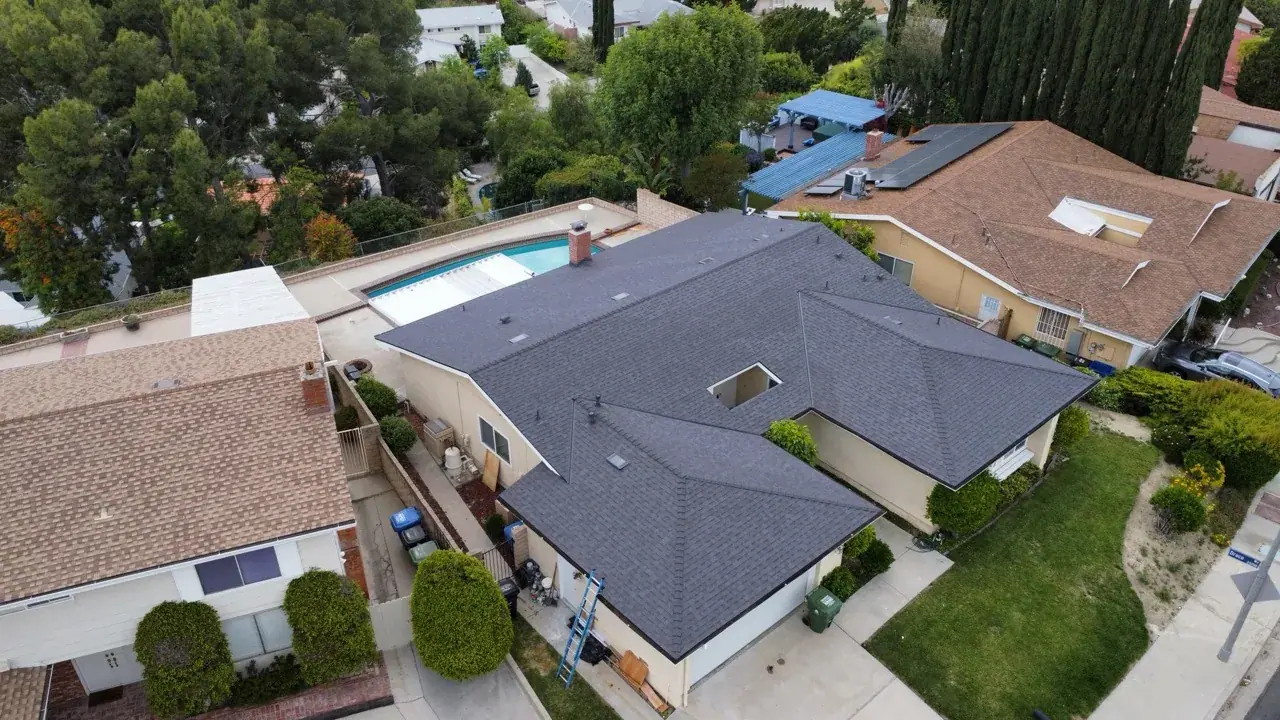
Inclusive Roofing serves the San Fernando Valley and communities across Los Angeles and Ventura counties. When contacting us about Thousand Oaks, Woodland Hills or Sherman Oaks, share the property location, roof type if known, photographs and any access restrictions. These locations describe our service coverage, not the location of the portfolio photograph used with this article.
Use our contact form to discuss an inspection and current availability. Before hiring a contractor, verify the license and review written terms using the California Contractors State License Board guidance below.
Frequently asked questions
Does a ceiling stain mean I need a new roof?
No. A stain shows that moisture needs investigation, but it does not establish the entry point or the extent of roof damage. A localized repair may be appropriate when the surrounding assembly is serviceable; replacement should be supported by evidence of a broader problem.
Can water appear away from the actual roof leak?
Yes. Water can travel along decking, framing or other surfaces before becoming visible indoors. The inspection should connect indoor evidence with roof conditions rather than assume the defect is directly above the stain.
Can a roof leak be inspected while it is raining?
Rain may reveal useful indoor evidence, but wet surfaces, wind and access hazards can prevent a safe exterior inspection. The contractor should explain what can be assessed safely and whether another visit or further investigation is needed.
What should I receive after a roof leak inspection?
Ask for an explanation of observed defects, supporting photographs where accessible, inspection limitations and a written recommended scope. Confirm how concealed damage, additional work, completion checks and warranty terms will be handled before authorizing repairs.
Does Inclusive Roofing serve Thousand Oaks, Woodland Hills and Sherman Oaks?
Yes. These communities are within Inclusive Roofing's service coverage. Contact the team with the property address and the nature of the issue to discuss inspection access, scope and current availability.
Official guidance and references
Consult these resources for the relevant public guidance. Product suitability, permit requirements and inspection findings must be confirmed for your property.
Keep reading
- Guide: Repair vs. replacement
- Guide: Estimate cost factors
- Guide: Materials comparison
- Fall Roof Maintenance: Prepare for Winter Rain
- Tile vs. Shingle in Pasadena: Which Roof Is Right for Your Home?
- The Roof Permit Process in West Covina: What to Expect
Related: roofing services, cities we serve, FAQ.